
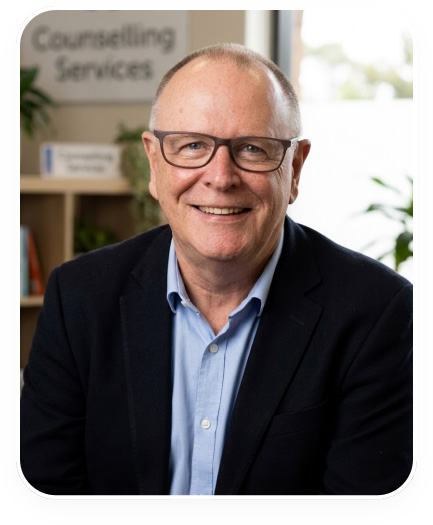
Before becoming a qualified counsellor, I graduated as an electrical engineer and worked in senior roles in Australia and internationally.
As I became more involved in leadership, my curiosity gradually shifted from understanding how things work to understanding how people work. This led me to complete a Diploma of Counselling and explore more deeply the nature of relationships, resilience, human behaviour, emotional wellbeing, and personal and spiritual growth.
No two people have exactly the same experiences, circumstances or needs. For this reason, I do not believe in taking a one-size-fits-all approach to counselling.
Our first step is to understand what has been happening in your life, what is important to you and how you would like things to be different. Counselling provides a private, supportive and non-judgemental environment in which you can speak openly and feel heard, respected and understood.
From there, we can clarify your goals and explore practical and achievable ways of moving towards them. My approach is flexible and tailored to you, allowing us to draw on the counselling methods and perspectives that are likely to be most helpful.
Counselling is a collaborative process. Rather than telling you what to do or imposing solutions, I will help you develop greater understanding, recognise your strengths, consider new perspectives and identify changes that feel realistic and meaningful.
At the heart of my work is person-centred therapy, which recognises that you are the expert in your own life.
My role is not to decide what is right for you. It is to provide a supportive space in which you can explore your thoughts, feelings and experiences at your own pace. Together, we can develop a clearer understanding of what you are experiencing, recognise the personal strengths and resources you already possess, and consider ways forward that feel right for you.
We usually begin with you telling the story of what has brought you to counselling and describing what you would like to change. As our work progresses, I may provide relevant information or introduce ideas and techniques from approaches such as:
I may also provide psychoeducation to help you understand particular emotional, psychological or relationship patterns. Sometimes simply understanding why we think, feel or behave in a particular way can make our experiences feel less confusing and easier to manage.
Before introducing a particular approach, I will explain what it involves, why I believe it may be helpful and what you can expect. You can then decide whether it feels appropriate for you.
Throughout counselling, we will review your progress, discuss what is or is not helping and adjust our approach when necessary. Your feedback is an important part of this process.
Your privacy is important. What you share during counselling will be treated as confidential, and I will not disclose that you attend counselling without your permission, except where disclosure is required or authorised by law or is necessary to address a serious safety concern.
My clinical notes are stored securely in a locked cabinet and are not kept online. As part of maintaining appropriate professional standards, I may discuss aspects of my counselling work with a qualified professional supervisor. Where this occurs, identifying information is withheld wherever possible.
There are some circumstances in which confidentiality may be limited. These may include:
Where it is safe and legally possible to do so, I will discuss any proposed disclosure with you before taking action.
Further information about privacy, record-keeping and the limits of confidentiality will be provided before counselling begins.